Traveling While Immunocompromised: Why There Is No Home for the World’s Seers
It’s been two years since my Long COVID journey began and six years of being COVID-conscious. My intuition in March 2020 was that humanity would not know how to handle something like SARS-CoV-2. I predicted that it would take at least five years for humanity to come to terms with what was happening. I rarely say things like this with certainty, but I was right.
After about a year of intense health struggles, I finally ventured one state over after barely making it out of my apartment. Packing the car flattened me and I went horizontal for hours while dealing with a discriminatory host at the destination city, but I made it there and back. A year after that, I drove myself halfway across the country to the Pacific Northwest—despite not being able to walk, I can drive longer than most.
I came looking for several things. I wanted a place where I could relocate and access more of the remote job market, community with like-minded people, and a culture that understands the ongoing pandemic for what it really is: not a thing that happened, but a thing that is happening, and a global event we’re collectively refusing to metabolize. But what I thought could be a path to greater freedom turned out very quickly to be a reality check.
I realized that moving would ameliorate some challenges, but until the fundamental structures of society transform, it would never solve the underlying problem. Years ago, I joined a group of non-White people exploring belonging. Someone said, voice shaking, “Where even is home?” That phrase haunts me—because despite the greater level of support for COVID consciousness in the Pacific Northwest and places like it, what my travels taught me is that even when you’re in the cities Trump despises most, for people who are immunocompromised, there still is no home.
What Actually Happened: Traveling While Immunocompromised in Less Than 24 Hours in Seattle
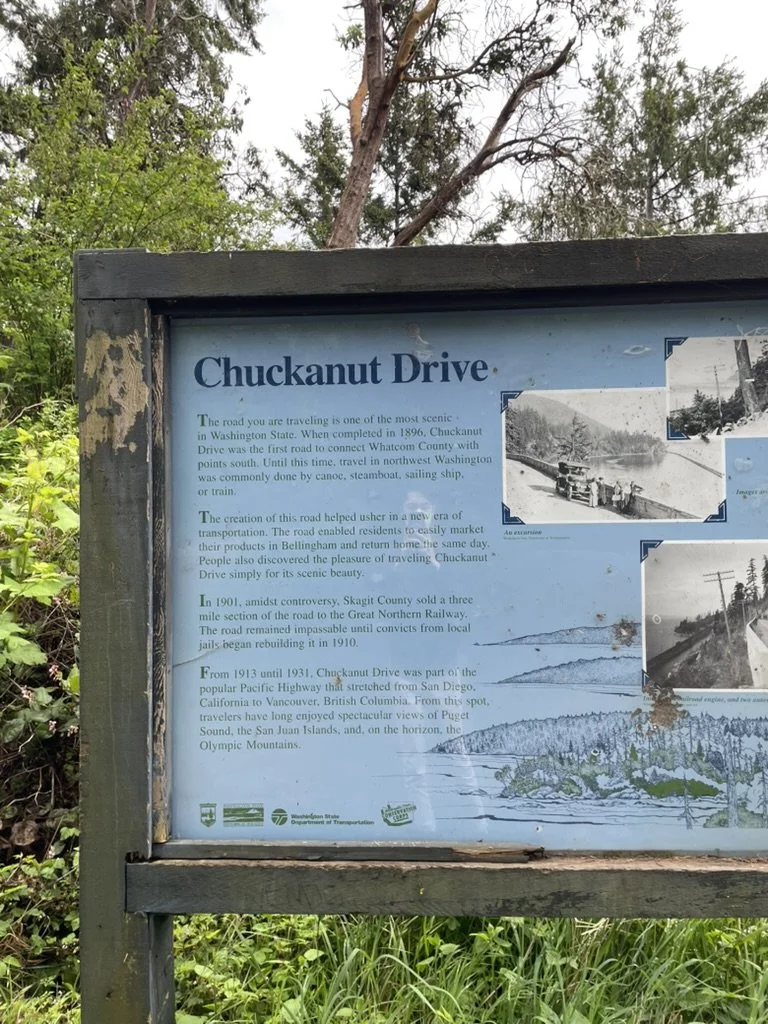
A photo from Chukanut Drive
My travels began with a Buddhist retreat billed as COVID-conscious. The teachings were rich, and the practices were lovely—but underneath it all sat silently eugenicist collective behaviors. The Buddha wasn’t wrong about dukkha—suffering, unease—but at this retreat, people seemed to enjoy it, taking their masks off at every possibility as if it were a symbol of oppression and not the care they said they valued so much, and then requesting forgiveness for something they never showed willingness to confront. The heart didn’t move enough to change the operational structure. Spiritual depth paired with structural cruelty is just cruelty with a sangha wrapper.
That retreat, which I’ll write more about later, was a microcosm of a pattern I’d encounter everywhere else. Here’s what I encountered afterwards in less than 24 hours in Seattle:
New Paradigm Knowledge is a reader-supported publication. To receive new posts and support my work, consider becoming a free or paid subscriber.
I needed gas. Finding a gas station isn’t just about the pump. It’s about invisible spatial politics. Where can I pull up without being approached? Which stations have attendants who won’t crowd me? Which ones will I have to drive away from and try again? At one station along the way, I was yelled at and coughed at by a White man for wearing a mask, a double microaggression towards someone who has never spread the virus to anyone. Even without the yelling, the constant navigation—the approach, the escape, the finding another station. It’s the hidden labor of staying safe while everyone else treats eugenics as a daily ritual without batting an eye.
I went through a drive-through. The alley was narrow, and I was within two feet of the person and don’t know if my mask held up. Now I’m waiting. Counting. Two weeks of uncertainty: Did I get infected? What does that mean? This isn’t abstract worry. Infection could end my life, especially if I’m struggling to access vaccines, another point of risk which most public health institutions refuse to acknowledge. The decimation of public health—the way we’ve subjugated our guidance and messaging to Europatriarchal capitalist priorities instead of science-based, collective responsibility—only compounds the problem. A drive-thru pickup isn’t small when the stakes are your life.
I wanted to go to a restaurant. I’d love to experience sitting down, ordering an eggs Benedict, and being part of the social ritual that everyone else takes for granted. But what does it cost me? What does it cost my body? What about my friends with MCAS, who can eat nothing but sweet potatoes or rice now? Takeout is theoretically possible, but each small exposure compounds. You’re not just thinking about one meal. You’re thinking about the infection risk you’re carrying into the next interaction, the next day, the next week. It’s mathematics you have to do in your head constantly. And the answer is usually that the dine-in isn’t worth what it would cost.
I saw parks. Beautiful parks. Chukanut Drive, with bike lanes carved out for people who can use them, the lanes I longed to use when I’d saved enough for a quality road bike and cross bars. You can drive through and see the nature. You can experience it from behind glass. You can step outside where there’s an overlook, if it’s empty enough. But you can’t walk it. You can’t access it. These places were created for everyone. Except you’re not everyone. When you tell people this—when you say, “I can’t access the park”—they have nothing to say back. Just silence. And in that silence, you understand exactly what our toxically individualistic society thinks you’re worth.
Getting beyond the parking lot is its own impossibility. You can drive to a trailhead. You can get out and look at it. You can see where the trail goes, and that’s where it ends for you. You’re not excluded by policy or by gatekeeping (a rare treat, and one I’ll talk more about later). You’re excluded by the fact that your body can’t do what the world assumes all bodies can do, and now you’re supposed to be grateful for the parking lot and your tax dollars at work.
I wanted to have face-to-face conversations with colleagues I respected. That’s what networking is supposed to mean, and I thought LinkedIn, for a moment, could be a genuine way of establishing connection. But for me, a face-to-face conversation requires negotiation. When I express my needs, I’m told, even if kindly, that it probably wasn’t worth it. “It probably isn’t worth it” is the tell. The people I reach out to aren’t bad people or unkind. But my access and participation needs are calculated as more burden than benefit. I don’t fit in the spreadsheet.
I wanted to go on a date. The first response was the assumption: “Meeting up with a cute guy over a meal would be a nice treat!” Except I didn’t propose meeting over a meal, and your idea of cute might change when you realize the photos are of someone without chronic redness in the left eye and who’s become a skinny legend that rarely takes photos, much less has friends who will do it. You’re assuming I can meet up over a meal. The subsequent moment of shock is part of the invisibility. You’re not even in the calculation.
Society’s Behaviors and the Basic Dignity It Refuses to Immunocompromised People
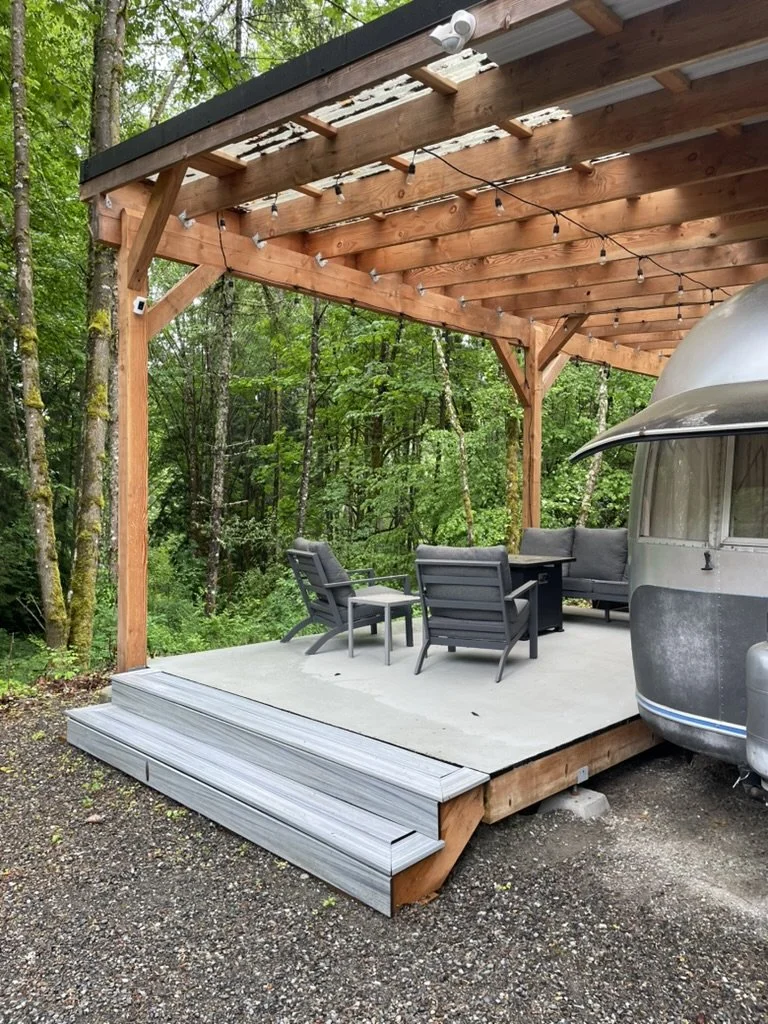
Taking refuge in the woods because you-know-why
For many immunocompromised people, the trade-off becomes inescapable. In the current paradigm, you’re in the middle of nowhere alone or in the middle of somewhere where you might die and no one will care. Getting gas means entering a space where COVID is circulating. Talking to somebody face-to-face means proximity. Going through a drive-thru: proximity. Getting takeout: proximity. Going to a park: proximity. Enjoying nature: proximity. Getting beyond the parking lot: proximity. This is the actual math of immunocompromise in a civilization that has decided it’s over. Apparently, wearing a mask is oppression.
Even in places like Seattle, where people claim to care and many do, the onslaught of mainstream culture is killing everyone—especially those on the margins, who could actually help fix the culture if people would listen. Even when there is a list of events I can comb through, realistically, I’m lucky if I can attend twenty percent. Again, marketing versus reality. The ways in which society has decided to prioritize connection and belonging for some—premised upon someone else’s exclusion—is abhorrent and it is a form of apartheid. The consequence is that even when you have resources, even when you have more privilege than I do, if you’re immunocompromised, you’re systematically disappeared from society. You drive if it’s accessible, you sleep, you stay inside. If you can work or able to find it, you’re lucky.
When people finally hear about inequality, most experience shock or feign concern, then wonder why nothing is changing. The response: “I never heard about this.” “I hope you live.” “I didn’t know that was happening.” “I can’t imagine.” Of course you didn’t. You systematically excluded the people who could tell you how to transform it. You didn’t build for them. You didn’t create spaces where they could exist. You didn’t ask them what they needed. And now you’re surprised that the perspective of millions is completely absent from every conversation about the future, while you either feign inclusion, hide behind intent, or deny the existence of Covid altogether.
This is how exclusion works. You eliminate the voice, and then you claim ignorance about what was eliminated. You cannot expect the medicine to enter when you refuse it over and over. You disappear the people, and then you’re shocked to find that they’ve disappeared. It’s circular. It’s structural. And it’s been happening for a very long time.
How Exclusion Propagates: Specialness, Pathological Individualism, and the Medicine We Refuse
To understand why this happens, we have to look at what’s operating beneath the surface at the level of the mind.
Specialness is where it begins. It’s the mindset of being exempt from accountability, exempt from the rules, exempt from the costs incurred. It is where the algorithm of exile starts—one of three forces operating beneath the surface of civilization. Every news event that gives you terror, every collapse trend you see—it starts inside us. When you believe you’re special, you can excuse yourself from reality. You can maintain an illusion, which is the second part of the algorithm. Then, when things threaten safety, you choose someone to sacrifice. You annihilate them to protect the illusion. That’s the third element.
Do you see this is exactly how groups of people are obliterated?
It is what we allow versus what we exile that determines what can happen. This is not abstract. This is material. This is happening right now, and hundreds of millions of people living outside of your awareness are experiencing it every day.
The ones with the medicine are often the ones being left out. The people who have been forced to see clearly because they had to survive are those who carry wisdom that the rest of us desperately need. When we exclude them, we exclude the very knowledge that could save us.
The medicine will never arrive if we keep excluding.
A healthy individualism focuses on authentic differentiation connected to the whole. But our individualism here is focused on narcissism, specialness, and exemption. It bends so fiercely into exemption that we forget we are connected. We forget that we can move together. That we must move together if anything is going to change.
Unless those with immune privilege—those who have taken up political space in public spaces due to privilege they didn’t earn—step up and do the work instead of capitulating to a paradigm that won’t care for them when they fall ill, there is very little that will shift. You have to understand that expanding the scope of what and who you can value is where the real safety is, and that staying small puts you at greater vulnerability.
New Paradigm Knowledge is a reader-supported publication. To receive new posts and support my work, consider becoming a free or paid subscriber.
Immunocompromised People Are Teachers of the New Paradigm
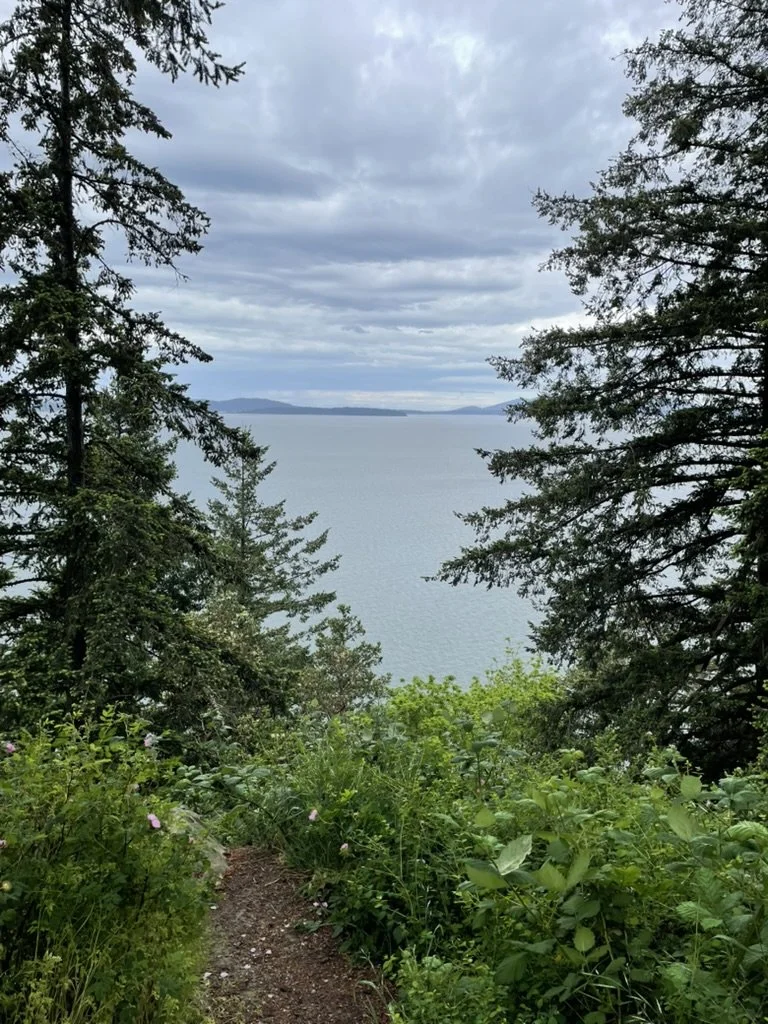
Most people deny the medicine, then wonder why they’re suffering
Disability is broad. Because of that, some disabled people can access plenty of spaces. Even as access must grow to include all forms of disability, the world has catered to certain kinds of disability that it deems acceptable or legible. But with COVID-19 being a mass disabling event, the equation is different. COVID revealed the world’s broken ontology. Yet there is no infrastructure built for immunocompromised people. Hundreds of millions are losing immunological function. There is no place designed with us in mind.
The heartbreak occurs when you realize that moving to one of the most progressive cities in America does not solve the fundamental fact that at every turn, you will feel dehumanized. It occurs when you realize that when millions—including many in their twenties—die, no one says the word COVID. But denial is cowardice. In this cowardly society, at every turn, the message is the same: immunocompromised people can stay home and rot. Never go anywhere. Never have any kind of life. Die for all I care. This is specialness when it decides who deserves to live. It’s the most toxic form of it, and it means your soul was dead long before your body breaks down.
Those of us on the outside—those pushed to the margins because we never fit the old paradigm—we carry something the world needs. We understand that the old paradigm that runs the average person doesn’t just kill a few people. It kills everybody. Everyone suffers and dies under it. Those of us on the margins? We know it. We’ve lived it. We are the carriers of the medicine.
If I ever move to Seattle, my job might be to be a chief of staff. An organizational development director. An L&D professional. But my actual vocation is to teach the fundamental principles of the new paradigm. The ones who can teach it are the ones who were never allowed to belong to the old one. We had to learn to see. We developed the diagnostic clarity just to survive. Now that clarity is what’s being asked of the world.
The world is crying out for those who carry the medicine. They are the ones you’ve been pushing out. The question now is whether you’re willing to listen.
